
Turkeys to Pasture
posted on
June 30, 2026

Now that the days are officially getting shorter (sorry to break it to you), how many of you are planning your Thanksgiving menu?
Here at Polyface, preparations are already underway!
A Bird of a Different Feather
If you're reading this, you're likely familiar with our old friend and flagship meat bird the Cornish Cross broiler... This month, we're focusing on getting a whole different kind of bird out to the field! Every year we raise hundreds of broad-breasted white turkeys, constantly moving them across our pastures to fresh grass. These birds help us bring our multi-species approach to grazing and fertilization to more of our land than we can reach with the broilers, while producing an exceptional table bird.
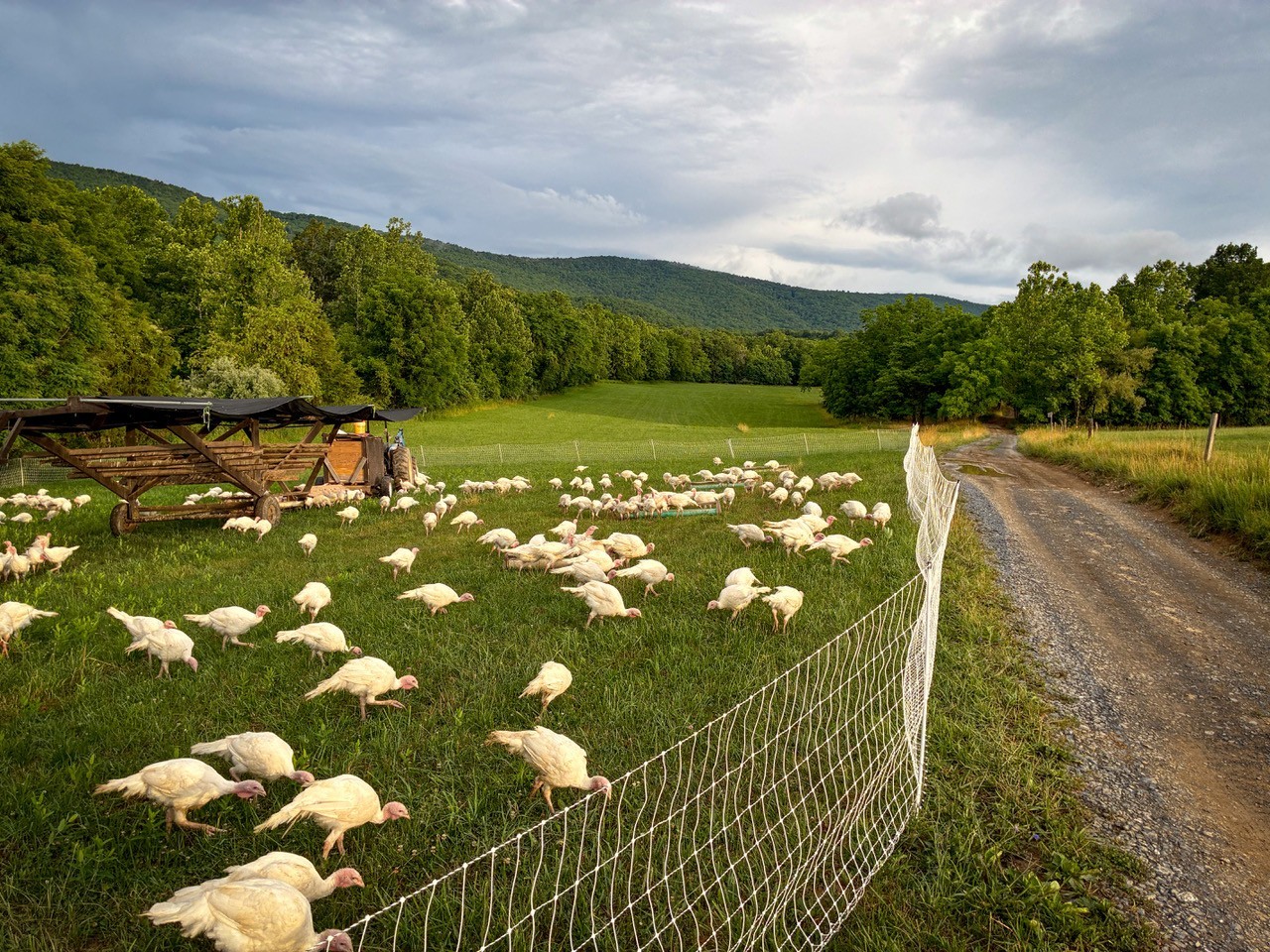
In fact, turkeys are arguably even more suited to our pasture-raised system. They're much more mobile, active, and far-ranging, covering a lot of ground in their daily ramblings! While they have free access to the same excellent non-GMO local feed as our broilers, turkeys glean a much greater portion of their diet from the field. Since they're really out there gobbling up grasshoppers and seeds, they also need to eat grit - surprisingly large pebbles of granite rock that serve to grind their food pre-digestion. Eating three times as much grass as chickens, turkeys are also excellent grazers. The pasture I'm currently running them in was harvested for hay once this year, and the fresh regrowth is like ice cream to these feathered foragers. When they're finished, the paddock looks like a golf green!
A Smart Start
Turkeys, especially the poults (turkey chicks), are not exactly known for their intelligence... Keeping these little guys warm, fed, and dry is a full-time job! Poults need pampering - extra cleaning, special protein requirements, and even more careful temperature control. Too cold and they pile under the heat source - too warm and they pile in the corners. If there's a way to drown under a roof, turkeys want to figure it out. If you enjoy a Polyface pastured turkey this year, you can probably thank my fellow apprentices Hank and Tyndall for their constant vigilance! Hank stayed up nights keeping the first batches comfortable, and now Dana and I have been marching them across the fields. Tyndall is mother hen to the new group, and they're doing wonderfully. A mother turkey will spend all day dropping little crumbs of food in front of the poults; she's showing them what's edible, where to find water and shelter. She only has 8 to keep alive, and Tyndall has eight hundred!

"It's great when they mob you in the brooder when you bring them green chop - they love it!"
- Apprentice Hank Valentine
As they get a bit older, they get a bit smarter... or tougher, at least. Broiler chickens need to be protected in shelters for the entirety of their quick 8-week trip through the pasture - they're as tender and delicious to a fox or a mink as they are to us. Young poults are a challenge to keep alive, but they outgrow the need for the brooder and we move them into our standard pasture shelters for a few weeks. Think of this as training wheels while they're still vulnerable to attack. After they're six or eight weeks old, however, the turkeys become pretty hardy. Large, quick, and alert, they're too tall a task for most of our local predators, and they're very robust against weather. What they do need, being woodland birds, is some shade.
The Gobbledy-Go
Our turkeys cruise around the pastures with a structure we call the Gobbledy-Go; this is a big oak V-truss structure on a mobile home trailer axle that supports a large shade cloth and a set of wide roost bars to perch on. The turkeys love the dappled shade; it simulates the shelter of trees so that we can move the birds around our open pastures where we need their animal impact. Following along are feed trays, grit pans, and automatically refilling water points that hook up to our gravity-fed mountain pond system.
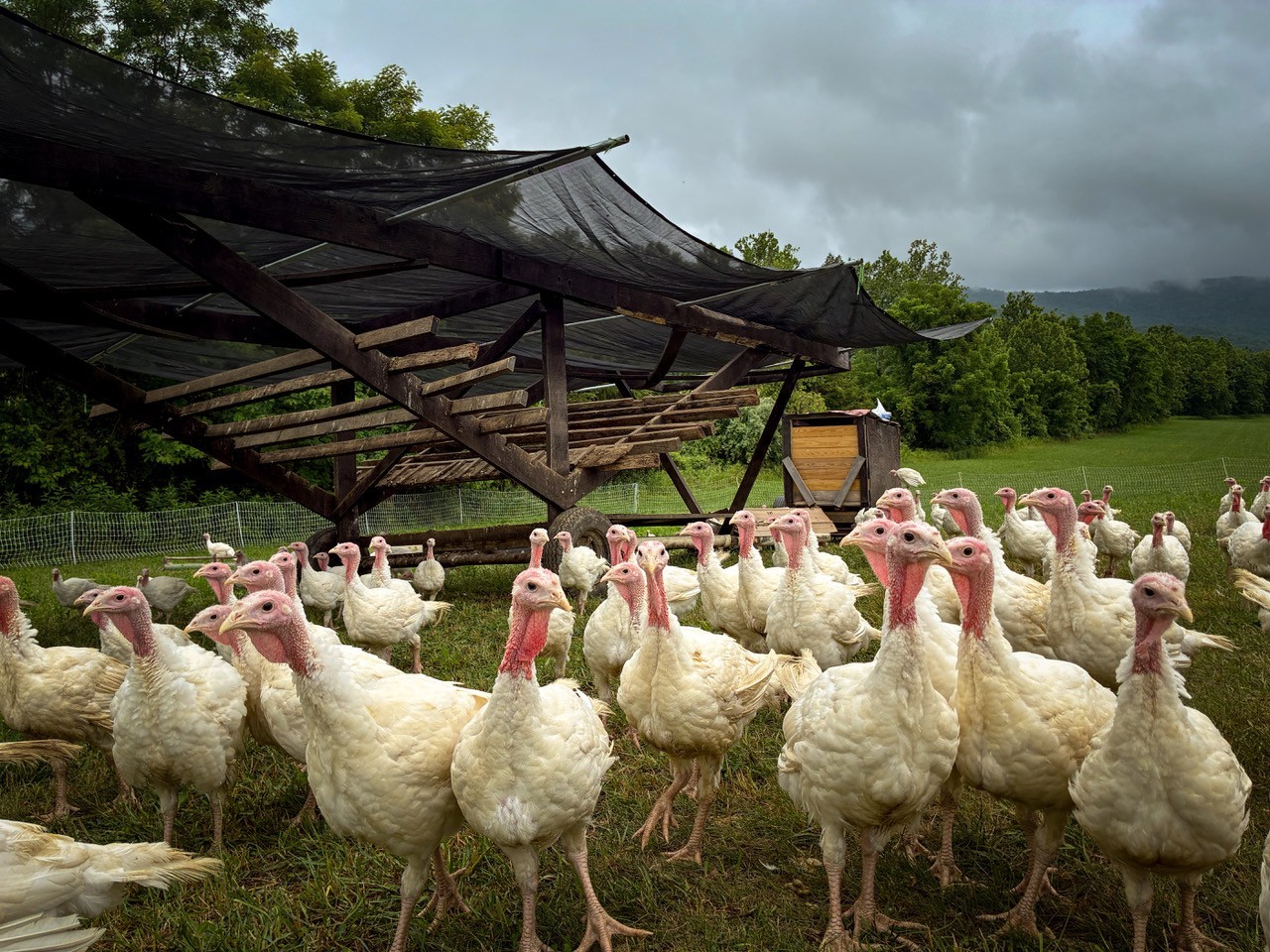
The real key here is electrified netting. The whole system is surrounded by portable electric nets, creating a 1/4-acre paddock every other day. This lets us control where and when the turkeys graze and fertilize, as well as protecting the flock from roving predators. However, these bird-brains are fully capable of untying the strings that hold their electric netting together (double knots, please) or pulling the wire connections off the terminal of the battery that powers if these things aren't carefully placed. They stick their heads through the netting to catch bugs and stand there getting zapped the whole time - they never seem to understand the electric shock. If they group up and push, they can run right over the net. We don't trim wings, but they don't fly out. With good exposure and consistency they come to understand the limit of their paddock. They learn that they have plenty of new grass and activity, and the net is too much trouble to bother with.
I have to say that running the turkeys is fun! Incredibly curious, they peck and tug at everything they can reach. Sure, they untie my boots as I feed them, and pull the zippers on my pockets - but being out there with them, touching so much of the land with care and intention, watching these big birds put on weight and get tall, strong and healthy is a joy. Once they're past the touchy brooder stage, they seem to really thrive out in the open grass. They come running when you show up to feed. We can herd them onto cattle trailers when we need to, and walk them back into their paddocks if they do get out. It pays to learn what the animal needs and wants, and to try to understand a little of their "psychology" - even if there doesn't seem to be too much going on upstairs.


